Grade A Commercial Spaces: How LEED & IGBC Certifications Influence Leasing Decisions

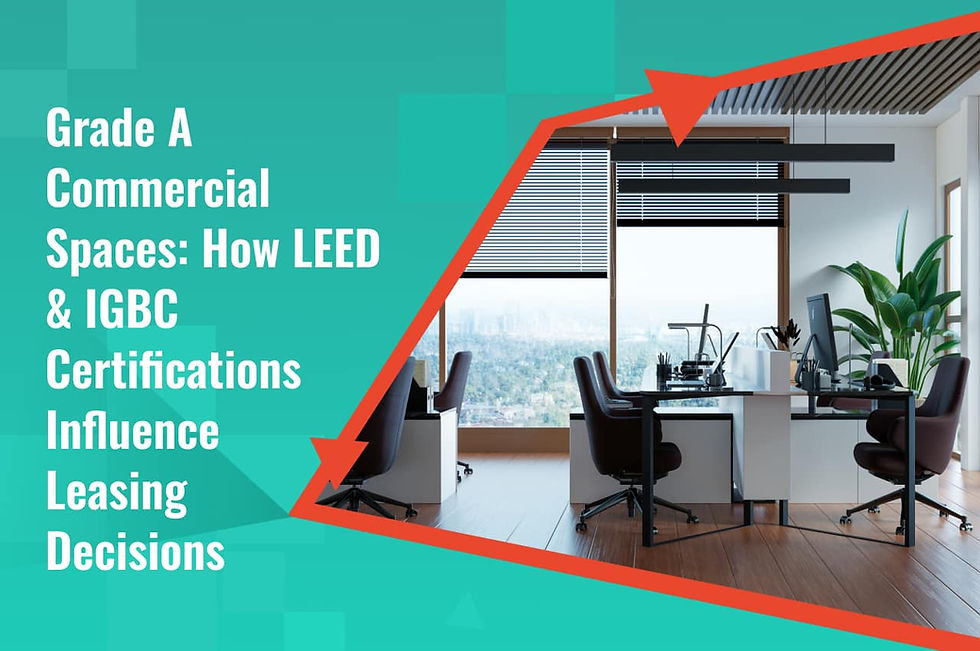
The demand for sustainable workspaces across India is growing rapidly. Businesses today seek smarter, healthier, and future-ready workspaces rather than conventional office environments.
As a result, Grade A commercial spaces with LEED and IGBC certification are becoming a preferred choice for businesses.
From multinational corporations to fast-growing enterprises, leasing decisions are now strongly influenced by green building standards. Companies want office spaces that improve employee well-being, reduce operational costs, and strengthen brand reputation.
This shift is clearly reflected in Bhubaneswar’s emerging Grade A commercial ecosystem. iHub Tech Park has earned LEED Gold Certification and is designed around sustainability, technology, and long-term business growth.
According to reports, the total green-certified office space stock in India has grown by 65% since 2019. As a result, it is estimated that there are now over 530 million sq. ft. of green-certified office space across major Indian cities.
Why Green Certification Matters in Commercial Spaces
Today’s businesses focus on employee experience more than ever before. The environment where employees work has a direct impact on productivity, collaboration, and retention.
LEED-certified buildings offer healthier workspaces through the following elements:
Ventilation
Natural Light
Indoor Air Quality
Temperature Control
Noise Reduction
All these elements contribute toward creating a more comfortable and productive work environment for teams.
The development features open-air collaborative breakout zones, natural light-optimised interiors, landscaped green spaces, and collaborative workspaces that contribute to creating an ecosystem where teams can work effectively while promoting employee well-being.
Global trends also support the growing demand for sustainable workspaces. India ranked second globally for LEED-certified real estate space in 2025, with more than 7,500 LEED-certified projects.
This demonstrates how strongly businesses are prioritising sustainable infrastructure while selecting office spaces.
Why Businesses Prefer Grade A Workspaces
Businesses increasingly prefer Grade A office spaces because they support productivity, employee well-being, and long-term organisational growth.
Companies also use Grade A office spaces to strengthen brand positioning while ensuring operations align with environmental sustainability standards. As a result, multinational corporations increasingly prefer green-certified developments such as iHub Tech Park.
Is There Any Relation Between LEED Gold Certification and Corporate Brand Value?
Today, office environments play a direct role in shaping corporate perception.
Leasing office space in LEED-certified buildings enhances how a company is perceived in the marketplace. Clients, partners, and investors increasingly view sustainable businesses as more future-ready and socially responsible. This is especially true for MNCs & IT companies.
At iHub Tech Park, the buildings have been designed to create a sustainable, scalable, and innovative infrastructure ecosystem that supports enterprises, innovation labs, and multinational corporations through flexible Grade A commercial spaces.
Additionally, the LEED Gold Certification strengthens iHub Tech Park’s position as a forward-looking commercial destination in Bhubaneswar.
The Future of Office Leasing and the Growing Sustainability Trend
Location remains important. Accessible infrastructure remains important. However, sustainability has now become equally critical.
Green-certified buildings are increasingly preferred because they deliver long-term value through:
Long-term operational cost benefits
Employee well-being
Regulatory compliance
Lower environmental impact
Improved business continuity
The growing demand for green-certified buildings is also influencing developers. Many Grade A commercial developments are now pursuing LEED and IGBC certifications as an integral part of their planning strategy.
At iHub Tech Park, the vision of creating a future-forward commercial ecosystem is already taking shape. With over 1 million sq. ft. of commercial space planned across multiple phases, the development is contributing toward transforming Bhubaneswar into a major innovation and business hub.
The project features innovative building design, flexible office infrastructure, avant-garde amenities, and scalable workspaces.
With its LEED Gold Certification, future-ready infrastructure, green ecosystem, and integrated business environment, iHub Tech Park represents the next generation of sustainable commercial development in India.
FAQs
1. Why are LEED and IGBC certifications important for commercial spaces?
Answer: These certifications ensure sustainable infrastructure, healthier work environments, lower operating costs, and improved energy efficiency for long-term business growth.
2. How do green-certified offices improve productivity?
Answer: Better ventilation, natural lighting, indoor air quality, and temperature control create a healthier, more comfortable workspace that supports employee well-being and productivity.
3. Why do businesses prefer Grade A commercial spaces today?
Answer: Grade A workspaces offer premium infrastructure, modern amenities, flexible layouts, sustainability benefits, and a professional environment that strengthens brand image.
4. How does sustainable infrastructure influence leasing decisions?
Answer: Businesses increasingly choose eco-friendly offices because they support operational efficiency, employee satisfaction, environmental responsibility, and future-ready business practices.
5. What makes LEED Gold-certified commercial projects attractive to MNCs?
Answer: LEED Gold-certified developments reflect innovation, sustainability, scalability, and strong corporate values, making them ideal for global enterprises and technology-driven companies.
6. How are green-certified buildings shaping the future of office leasing?
Answer: Green-certified commercial spaces are becoming industry standards due to rising demand for sustainable, efficient, and employee-focused office environments.


Comments